Five Small Ways to Help Your Nervous System Settle at Home
Nervous System & Stress
Five Small Ways to Help Your Nervous System Reset at Home
You did everything right today. You got through it. And now you're home, the day is technically over, and your body still hasn't gotten the message.
That tension in your jaw, the shallow breath, the thoughts cycling on a loop at 9pm, that's your nervous system still running the alarm. It hasn't had a clear signal that the threat is gone. A nervous system reset doesn't require a spa day or an hour of meditation. It needs small, specific cues that tell your body: we're safe now, you can let go.
Here are five of them. Simple things. Things you can try tonight.
Why Your Nervous System Stays On After the Day Ends
Your nervous system doesn't automatically flip a switch when you walk through the front door. It responds to input, what it sees, hears, feels, and senses through the body. When the input keeps signaling rush, scroll, perform, or brace, it keeps responding accordingly.
The good news is that the same system that ramps up can also wind down. It just needs the right language. And that language is physical, not mental. You can't think your way into a calmer nervous system. You have to feel it.
Five Ways to Reset Your Nervous System Tonight
1. Slow your exhale down.
The exhale activates the parasympathetic branch of your nervous system, the part that handles rest and recovery. A longer exhale than inhale sends a direct signal to your brain that you're not in danger. Try breathing in for four counts, out for six or eight. Do it three times. That's it. You don't need an app. You don't need a special room.
2. Put weight on your body.
A heavy blanket, a warm compress on your chest or belly, even your own hands pressed gently over your sternum, weight and pressure tell your nervous system that your body is held. There's an entire branch of somatic work built around this principle. You can access a version of it for free, right now, on your couch.
3. Hum, sing, or make any low sound.
The vagus nerve runs through your throat. Gentle vibration through humming or low tones stimulates it directly. This is why singing in the car sometimes feels like it actually does something, it does. You don't need to sing well. A low hum while you're washing dishes counts.
4. Get your feet on the floor.
Not metaphorically. Actually feel your feet. Press them flat into the ground and notice that sensation, the temperature of the floor, the pressure under your heels and toes. This kind of grounding attention brings your awareness into your body and out of the loop in your head. It interrupts the rumination and gives your nervous system a physical anchor.
5. Lower the visual noise.
Your eyes are always scanning for threat, it's wired in. Bright screens, fast-moving content, and overhead fluorescent light all keep that system active. Dim your lights earlier in the evening. Soften what your eyes are doing. Even switching your phone to a warmer color temperature, or swapping overhead lights for a lamp, can shift the tone of your nervous system before bed.
When Small Things Aren't Enough
These practices matter. They add up over time and genuinely support your body's ability to regulate itself. But they also have a ceiling.
If you've been running on high alert for months or years, your nervous system has adapted to that state. It starts treating tension as normal. Some of that patterning lives in the tissue, in the breath, in the body's habitual holding, and small home practices alone won't reach it.
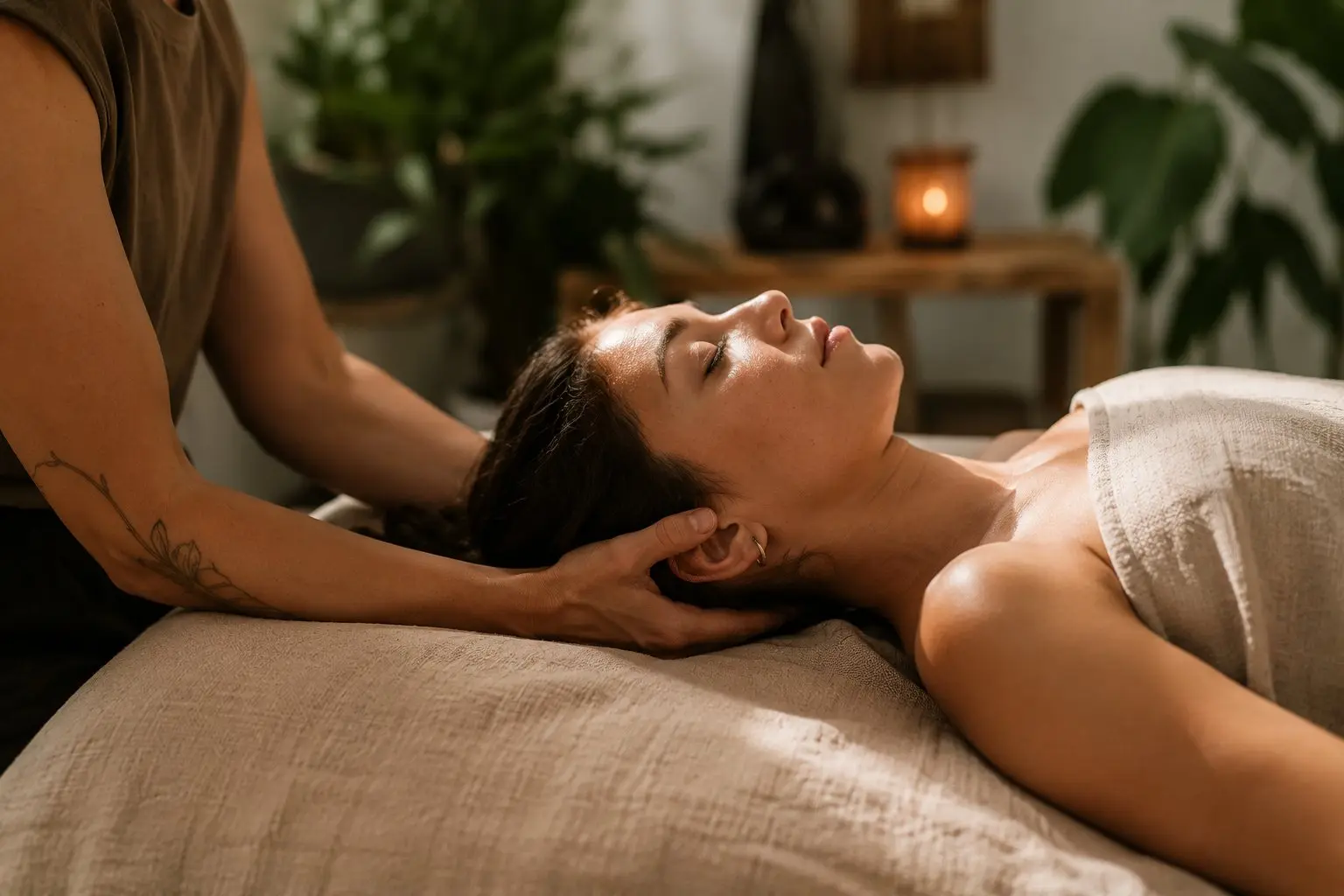
That's where bodywork, somatic work, and nervous system-focused sessions can go deeper. Not because something is wrong with you, but because the body sometimes needs another body's support to remember how to let go.
At Moon Moth in Austin, sessions are built around exactly this, whether that's therapeutic massage, somatic release breathwork, or a combination of bodywork and energy work. The goal is always the same: help your system find its way back to settled.
FAQ: Nervous System Reset at Home
What does a nervous system reset actually feel like? Most people describe it as a slow release of tension they didn't know they were holding, a deeper breath, warmth in the chest, a heaviness in the limbs that feels good rather than exhausted. It can feel subtle at first, especially if your baseline has been stressed for a long time.
How often should I do these practices? Daily, even briefly, is more effective than occasional longer sessions. Two minutes of slow breathing before bed every night will do more over time than a 20-minute practice you do once a week.
Can bodywork help with nervous system dysregulation? Many people find that hands-on bodywork supports their ability to settle in a way that home practice alone doesn't reach. Therapeutic massage, somatic work, and breathwork are all commonly used to support nervous system regulation, not as treatments, but as invitations for the body to shift.
Is this the same as mindfulness or meditation? Some overlap, but these practices are more body-first. Rather than directing your attention or clearing your mind, you're giving your body physical input that signals safety. For people who struggle to sit still or quiet their thoughts, these approaches can feel more accessible than traditional meditation.
How do I know if my nervous system needs more support than I can give it at home? If you consistently feel wired at night, can't fall asleep even when you're exhausted, feel disconnected from your body, or have been carrying tension for a long time without relief, it may be worth working with someone. A practitioner who focuses on nervous system-aware bodywork can help you understand what your body is doing and support you in shifting it.
These five things won't solve everything. But they're real, they're free, and they work with your physiology rather than around it. Start with one tonight and notice what happens.
If you're curious about going deeper, Moon Moth offers sessions designed around exactly this kind of work. Reach out or book online whenever you're ready, there's no pressure, and no prior experience required.